
The Science Behind Aroma in Indian Spices: Why Fresh Spices Smell So Powerful

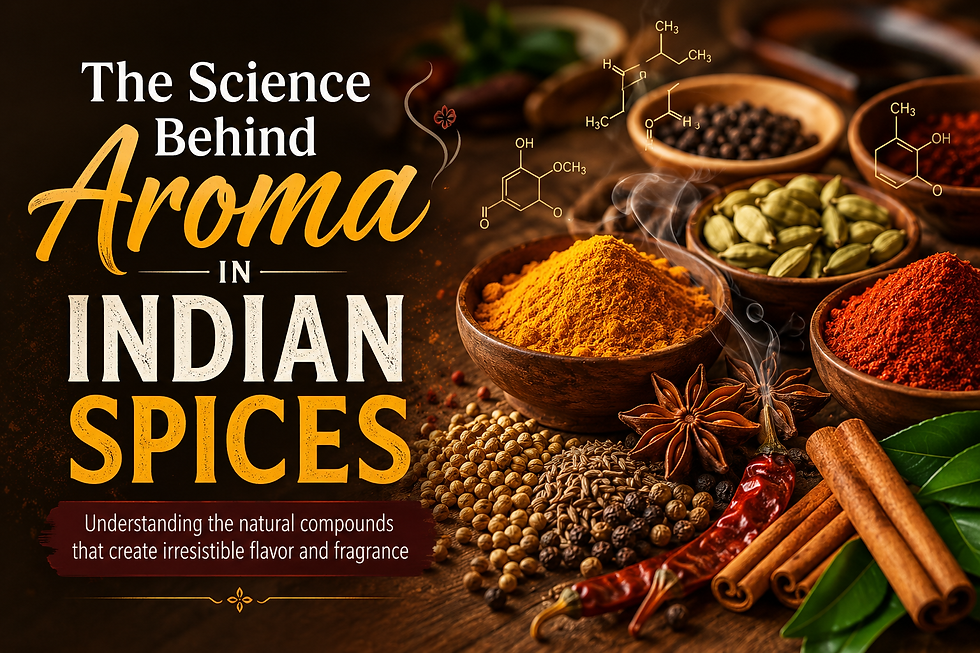
Walk into an Indian kitchen while cumin crackles in hot oil or freshly ground coriander hits the pan, and the air transforms instantly. It becomes warm, earthy, citrusy, smoky, sometimes even floral. Indian spices do not simply add flavor. They create an experience.
But what exactly causes this unforgettable aroma?
The answer lies in science, natural oils, and centuries of traditional spice processing. Understanding the science behind aroma in Indian spices can help you choose better-quality spices, store them correctly, and elevate your cooking naturally.
What Creates Aroma in Indian Spices?
The aroma of spices comes from volatile essential oils. These are tiny natural compounds released into the air when spices are crushed, roasted, or cooked.
Each spice contains its own unique combination of aromatic compounds:
Coriander contains linalool, giving it a fresh citrusy scent
Cumin contains cuminaldehyde, responsible for its warm earthy aroma
Turmeric contains turmerone, which creates its woody fragrance
Cardamom releases cineole, producing a sweet cooling smell
Cloves contain eugenol, known for their intense spicy aroma
These compounds evaporate quickly when exposed to heat, moisture, or air. That is why freshly ground spices smell dramatically stronger than old packaged ones.
Why Freshly Ground Spices Smell Better
When spices are ground fresh, their essential oils remain trapped inside until use. Once powdered, those oils slowly begin to disappear through oxidation.
This is why fresh spices:
smell stronger
taste richer
require smaller quantities in cooking
create deeper flavor layers in curries and masalas
Pre-packaged spice powders often lose aroma because they may sit on shelves for months before reaching your kitchen.
Fresh grinding preserves:
volatile oils
natural color
flavor intensity
nutritional compounds
The difference between fresh turmeric powder and stale turmeric is like the difference between live music and a low-battery ringtone. One fills the room. The other merely exists.
The Role of Heat in Releasing Spice Aroma
Indian cooking techniques are deeply connected to spice chemistry.
Tempering (Tadka)
When spices are added to hot oil or ghee, heat releases their aromatic oils rapidly. This process is called blooming.
For example:
mustard seeds release nutty flavors
cumin becomes earthy and smoky
curry leaves release herbal freshness
Oil acts like a flavor messenger, carrying aroma across the dish evenly.
Why Whole Spices Last Longer Than Powdered Spices
Whole spices have a natural protective outer layer that keeps essential oils locked inside.
Examples:
whole coriander seeds
cinnamon sticks
black peppercorns
cloves
Once ground, spices are exposed to:
oxygen
moisture
light
heat
This causes flavor loss over time.
Shelf Life Comparison
Spice Form | Aroma Retention |
Whole spices | 1 to 3 years |
Ground spices | 3 to 6 months |
For maximum flavor, many chefs prefer grinding spices in small batches.
How Storage Affects Spice Aroma
Improper storage is one of the biggest reasons spices lose potency.
Best Ways to Store Indian Spices
Keep spices in airtight containers
Store away from direct sunlight
Avoid moisture exposure
Use dry spoons only
Keep away from stove heat
Glass jars or stainless steel spice containers work best.
A spice jar beside a hot stove slowly turns into an aroma escape tunnel.
Why Indian Spices Are Naturally So Aromatic
India’s climate plays a major role in spice quality.
Factors that improve aroma include:
tropical growing conditions
mineral-rich soil
traditional drying methods
slow sun-curing
natural farming practices
Regions like Kerala, Kashmir, Rajasthan, and Tamil Nadu are globally known for highly aromatic spices because of their unique environmental conditions.
The Connection Between Aroma and Health Benefits
Many aromatic compounds in spices also provide health-supporting properties.
Examples include:
curcumin in turmeric for wellness support
eugenol in cloves with natural protective properties
cinnamaldehyde in cinnamon known for antioxidant activity
linalool in coriander associated with digestive support
This explains why Ayurveda has valued Indian spices for centuries not only for taste, but also for overall balance and wellbeing.
How to Tell If Your Spices Are Fresh
Fresh spices usually:
have a strong natural smell
display vibrant color
release aroma immediately when rubbed
taste bold even in small amounts
Stale spices often:
smell dusty or weak
appear faded
require excessive quantities in cooking
A simple test: crush a small pinch between your fingers. If the aroma blooms instantly, the spice is likely fresh.
Conclusion
The aroma of Indian spices is a blend of chemistry, tradition, farming, and culinary craftsmanship. From sizzling cumin in hot oil to the earthy warmth of turmeric, every spice carries hundreds of natural aromatic compounds that shape flavor and experience.
Choosing fresh, properly stored spices can completely transform everyday cooking. The fragrance alone tells a story long before the first bite arrives.
Because in Indian cuisine, aroma is not just smell. It is memory, anticipation, and flavor floating through the air like edible poetry.
Frequently Asked Questions
Why do Indian spices smell stronger than regular spices?
Indian spices are often grown in tropical climates and contain higher concentrations of natural essential oils.
Which Indian spice has the strongest aroma?
Clove, cardamom, cumin, and freshly ground black pepper are among the most aromatic spices.
How long do spice powders stay fresh?
Most ground spices retain peak aroma for about 3 to 6 months when stored properly.
Does roasting spices increase aroma?
Yes. Dry roasting helps release volatile oils, making spices smell and taste more intense.
Why should spices be stored in airtight containers?
Airtight containers prevent exposure to oxygen and moisture, which degrade aroma compounds over time.


Comments